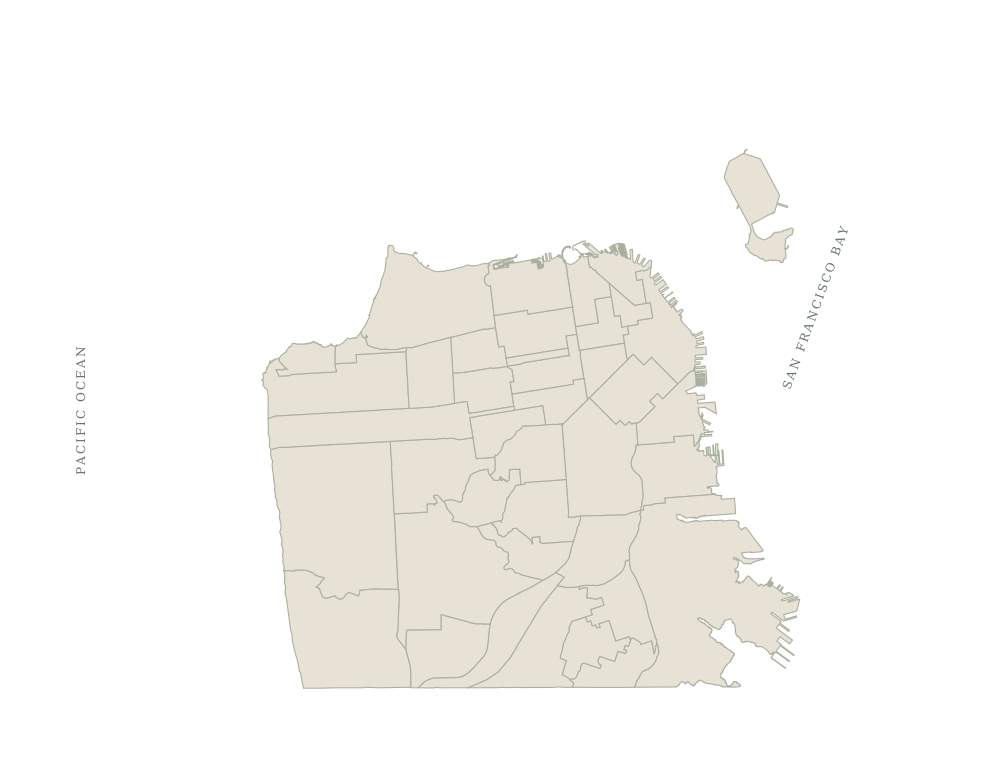
Sources: Zillow [5], SF Planning [6]
Average rent 2025
Housing units 2025
Map: DataSF · Analysis Neighborhoods
San Francisco already faces a housing crisis. A new wave of AI wealth could put even more pressure on the city.
Sources: Zillow [5], SF Planning [6]
Average rent 2025
Housing units 2025
Can building more market-rate housing solve this crisis?
A proposal in the Marina district to build 848 new market-rate homes.
However, the neighborhood isn’t happy about it.
“I don’t think it’s anti-housing. It’s anti-that-huge-project-that’s-really-terrible.”
“…it’s like this jarring monstrosity.”
“It’s not about views. It’s really about the fact that we have a weak infrastructure in the rain, and we notice it floods every time it rains.”
It depends.
Research shows new supply can bring rents down in three ways.
Each one works, but slowly and modestly [9]. And a flood of concentrated AI wealth can weaken all three.
Where do people go when a new home opens up?
One catch: this doesn’t work if the new tenant comes from outside SF.
What happens to homes as they age?
During periods of high demand, the opposite can happen.
Older homes filter up to higher-income households instead [13].
This is upward filtering.
Final section (WIP)
My plan for this section is a choose-your-own scenario based on different user-selected policy choices. Still thinking about what those are.